

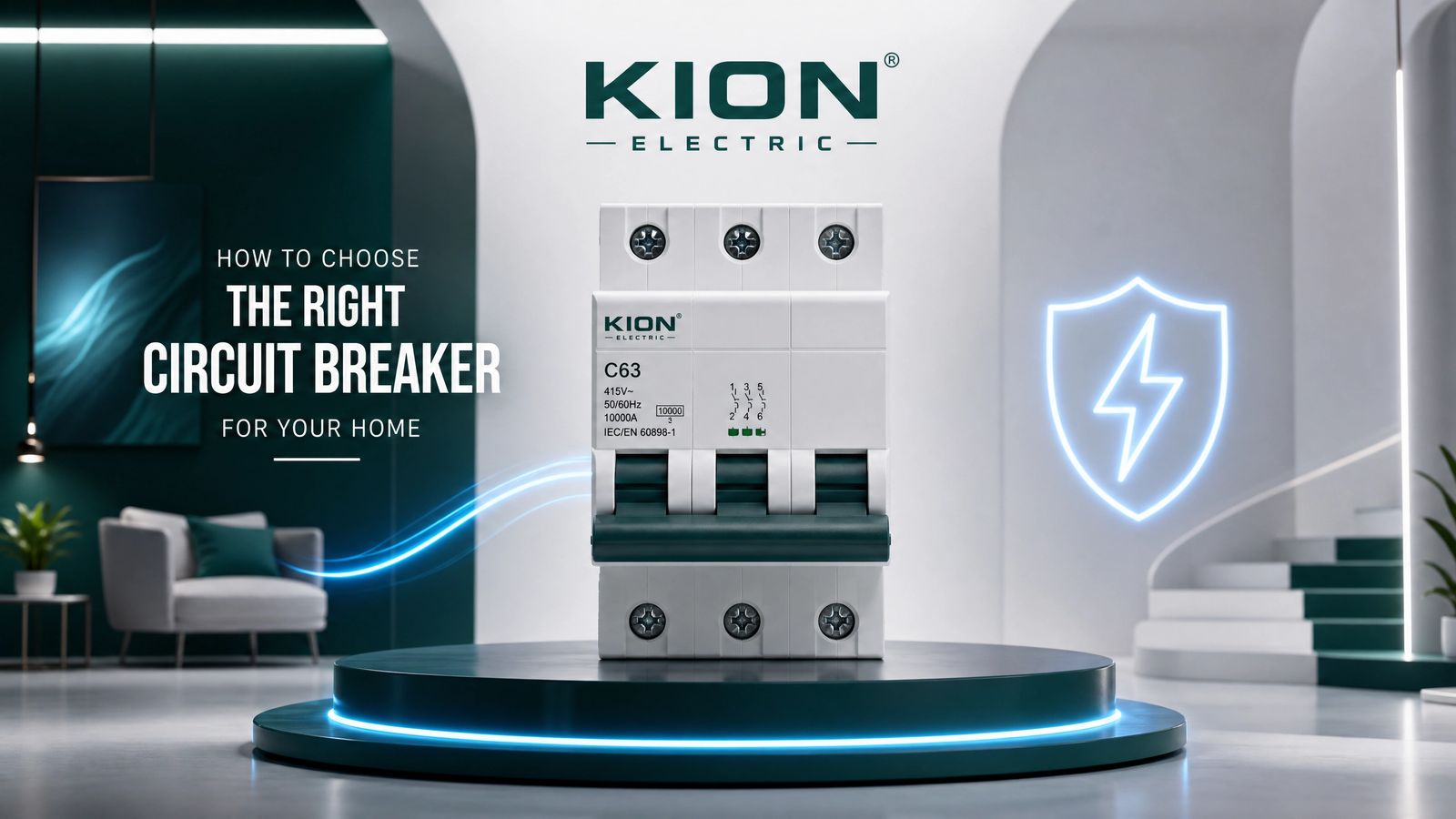
How to choose the right circuit breaker for your home? Types of circuit breakers and their importance
- List item #1
- July 13, 2026
- List item #3
Electricity is the lifeblood of every modern home, but it requires superior protection to ensure the safety of people and property. This is where the circuit breaker comes in, acting as the guardian of your electrical system. Choosing the right circuit breaker is not just a technical detail; it's a crucial decision that impacts your home's safety and energy efficiency.
In this article, we will delve into understanding the different types of circuit breakers, their importance, and how you can choose the most suitable one for your home to ensure the highest levels of safety and performance.
Why is a circuit breaker necessary?
A circuit breaker is an essential safety device designed to protect electrical circuits from damage caused by overload or short circuit. When the breaker detects an electrical current exceeding a safe limit, it automatically disconnects the power, preventing overheating of wires, fires, and damage to electrical equipment. Simply put, it is the first line of defense against electrical hazards.
Main types of circuit breakers
There are many types of circuit breakers to suit different uses, and they vary in their ability to handle different levels of electrical current and the number of phases they control. Here are the most common types:
1. Single-Pole Circuit Breakers
These circuit breakers are used to protect 120-volt circuits, such as lighting and standard electrical outlets. They interrupt the single-phase (hot wire) current in the event of an overload or short circuit.
2. Double-Pole Circuit Breakers
These circuit breakers are designed for circuits requiring 240 volts, such as water heaters, central air conditioning units, and electric ovens. They disconnect the two-phase current (two hot wires) simultaneously to ensure complete protection.
3. Triple-Pole Circuit Breakers
These circuit breakers are used in large industrial and commercial applications requiring 400 volts or more, controlling three phases of electrical current. They provide robust protection for heavy equipment and complex systems.
4. Molded Case Circuit Breakers (MCCB)
MCCBs are a robust choice for high-current circuits and are commonly used in the main electrical panels of commercial and industrial buildings. They are capable of handling large currents and provide reliable protection against overload and short circuits.
Key factors when choosing a circuit breaker
When choosing an electrical breaker for your home, several factors must be considered to ensure safety and efficiency:
- Rated Current (Amperage): The rated current of a circuit breaker must be appropriate for the electrical load of the circuit it protects. For example, a lighting circuit might require a 10-amp breaker, while a circuit of electrical outlets might require 16 or 20 amps. Always ensure the breaker matches the current rating of the wiring and appliances.
- Breaking Capacity (kA): This value indicates the maximum short-circuit current that the circuit breaker can safely interrupt without damage. The breaking capacity of the circuit breaker must be higher than the maximum possible short-circuit current at the installation point.
- Quality and reliability: Choose circuit breakers from trusted brands known for their quality, such as KION Electric, which adheres to the highest manufacturing standards and offers warranties on its products. High-quality products ensure stable performance and a long lifespan.
- Certifications and standards: Make sure that the breakers carry certificates of conformity to international and local standards (such as IEC), ensuring that they have passed rigorous safety and performance tests.
- Design and Suitability: In addition to performance, design can play a role in your choice, especially if the circuit breakers are visible. KION Electric offers circuit breakers with modern and stylish designs to suit various décor styles.
The importance of professional installation
Regardless of the quality of the circuit breaker you choose, proper installation is key to safety. Circuit breakers should always be installed by a qualified electrician to ensure they are connected correctly according to technical standards and safety regulations. Improper installation can lead to serious hazards, even with the best types of breakers.
Choosing the right circuit breaker for your home is an investment in safety and convenience. By understanding the different types of breakers and the factors that influence their selection, you can make an informed decision that protects your home and family. Always remember that quality and safety are non-negotiable when it comes to electricity.
Choosing the right circuit breaker for your home is an investment in safety and convenience. By understanding the different types of breakers and the factors that influence their selection, you can make an informed decision that protects your home and family. Always remember that quality and safety are non-negotiable when it comes to electricity.
Share this article:
-
 What is Motion Sensor and how does it work? September 20, 2026
 -
-
If Kyon entered your house... what would change? August 23, 2026